Palimpsest
LLM-Driven Timber Evolution
AI/LLM + Education + Architecture
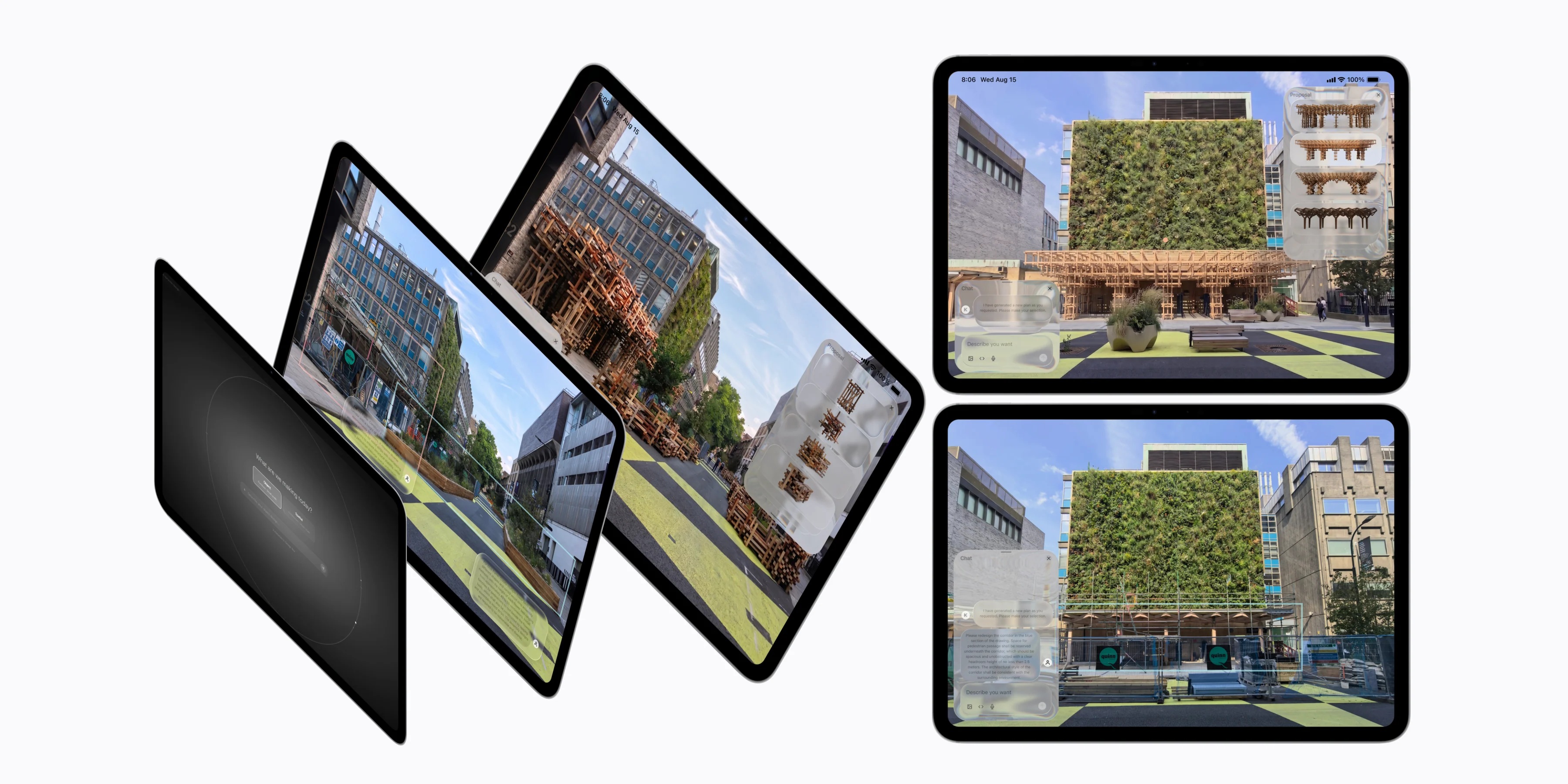
PALIMPSEST integrates multimodal large language models (MLLMs) and computational geometry, pioneering a construction system for adaptive upcycling of urban waste. Users upload data of discarded components; MLLMs co-trained with architectural and structural experts identify boundaries, cross-sections, and load-bearing characteristics, cataloging them into a parametric material library.
In response to spatial requirements, the algorithmic engine conducts geometric reconciliation and structural optimisation in a virtual environment, aggregating salvage into stable parametric configurations.
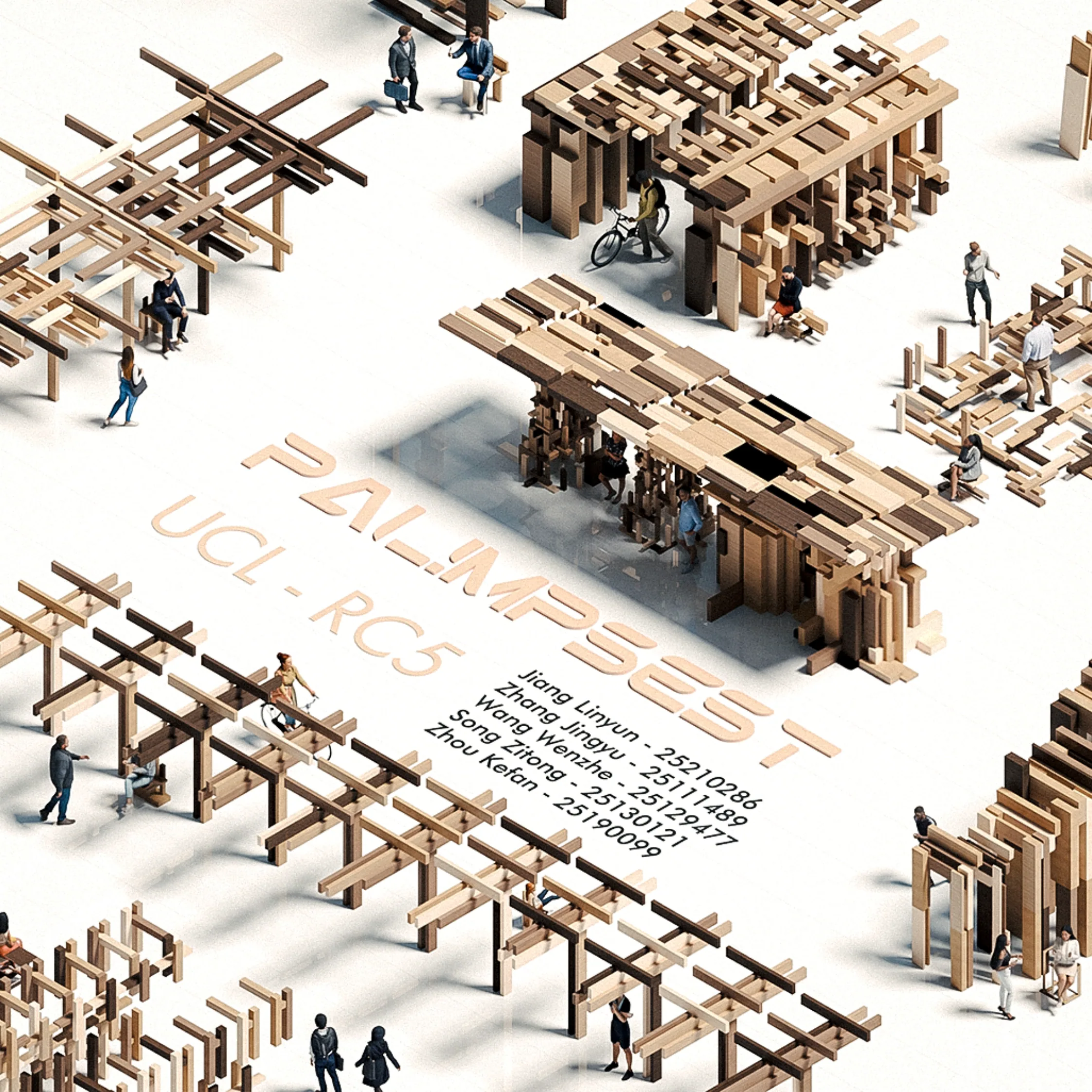
At the physical stage, the system synthesises 3D-printed nodes combining structural connection and tolerance compensation and outputs standardised fabrication code, replacing manual joinery and destructive processing. A diagrammatic assembly manual guides users step-by-step toward safe construction.
By integrating perceptual analysis, generative form-finding, distributed additive manufacturing, and intuitive assembly, this closed-loop architecture dismantles professional barriers, transforming urban waste into sustainable tectonic assets for future net-zero urban development.
Role
- Team Leader
- LLM development, debugging and iteration — sole responsibility
- 3D-printed product form design — lead
- Modelling and programming — lead
- Instructor
- Marios Tsiliakos, Stefan Bassing
- Type
- Academic
- Date
- 2025.09 - 2026.10
- Award
- Computational Prize 2025-26, UCL The Bartlett School Of Architecture
- Team Members
- Linyun Jiang, Jingyu Zhang, Zitong Song, Wenzhe Wang, Kefan Zhou
Background
Globally, construction waste accounts for 30% to 40% of urban solid waste, yet most demolition materials have not effectively entered the new construction cycle system.
Design Trajectory
Palimpsest proposes a circular material system for construction and demolition waste, aiming to transform discarded building materials into reusable design assets.
Digital Platform
Six interconnected interface stages guide users from material input to final assembly, from physical resource to digital asset, design component and buildable system.
Database
AI Agent
Khora is an AI agent capable of identifying material passports and creating design solutions according to user requirements.
LLM Round 2
LLM Round 3
LLM Round 4
3D-Printed Connectors
User Scenarios
Exhibited
The Bartlett Autumn Show 2026, London, Sep 2026 - Oct 2026.
 01Palimpsest2026Now reading
- 02Khora2026
 03My Babel2022
 04Digital Future 20202020
 05Digital Future 20212021